

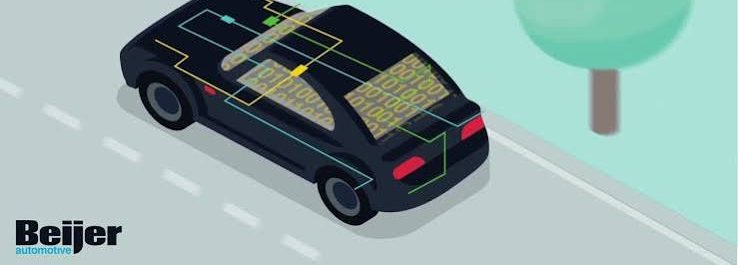
What does a CAN interface do?
A BCI reads data from the vehicle's CAN bus and converts it into signals that other equipment understands, such as a speed signal or switched ignition power. This lets you add aftermarket systems without having to work with the CAN bus yourself.
- Recognises the make and model automatically, within about 20 seconds of being connected
- One software configuration for all makes and models with a high-speed CAN bus
- Connects to power, ground and two CAN wires
- E-marked to UN/ECE Regulation 10 for electromagnetic compatibility
Applications
- Trip registration and track and trace
- Fleet management
- Taximeters
- Tachographs that need a speed signal
- Navigation, radio and other equipment that needs a speed signal or ignition power
Versions

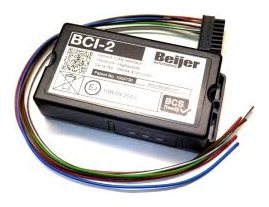
- BCI-2: universal interface with a speed signal and switched power as outputs.
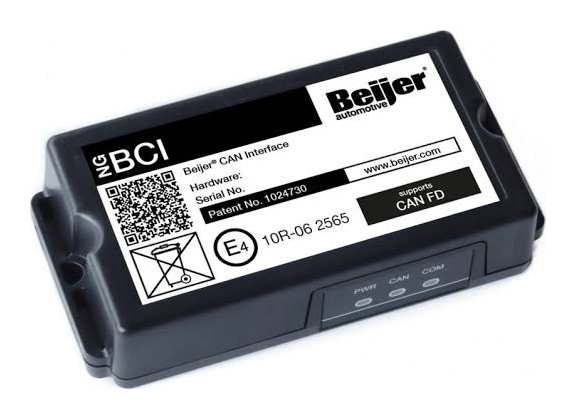
- BCI-NG (Next Generation): the new generation, also suitable for CAN FD, the faster CAN bus increasingly used in new and electric vehicles.
- Special versions, including one for tachographs (BCI-TACHO).
Professional installation
A BCI may only be installed by an automotive specialist. We check in advance whether your vehicle is supported, connect the interface according to the vehicle-specific installation instructions and test the signals.